Aging in a New Key: The Spiritual Benefits of Learning an Instrument in Later Years

After my 68th birthday, I felt an inexplicable urge to learn to play the piano. At my age? Come on. Had I suffered a stroke? I resisted, of course; it made no sense. But the desire wouldn’t let up.

Finally, after repeated attempts to quell this longing, my husband hauled up an old digital keyboard from the basement that friends had retrieved for us at a rummage sale in case we might need it someday. Well, that day had come. I felt that even this dated keyboard could be a trial run to test my new passion — better than blowing my retirement savings on a Steinway. I reasoned that I would wake up and come to my senses, eventually returning the keyboard to its dusty place in the basement.

Yet, with every practice my  passion only grew. I knew this was the real thing — a late-in-life calling that felt somehow sacred. Could this be my new spiritual practice?

This impulse toward beauty in the form of piano music is, in my mind, a  divine lure from somewhere inside my soul, speaking to me: “Just do it. Forget your age. Forget how to ‘use’ it in real life. Forget being good at it. Forget trying to impress or even perform. Just do it!”

Much has been written about the amazing cognitive benefits of learning a new instrument later in life, but the articles usually stop there. What about the spiritual aspects? How can it expand the soul?

Here are a few immediate benefits I have discovered:

  • Attention: The brain and spirit work in tandem. The cognitive benefits I have noticed, such as memory improvement and the ability to focus better, infuse my life outside of music. I can now focus without effort on a book or a conversation with friend. This strengthened sense of mindfulness keeps me from burning our supper, stumbling over the cats, and even enhances my meditation practice.
  • Patience: Learning a new instrument takes a long time in later Iife. Although my brain is not even a fraction as quick as it was as a child, I have patience in spades. And that patience grows and manifests itself in the real world with friends and family and long lines at the grocery checkout. It takes patience to simply grow old. Music practice is a patient builder.
  • Kindness: There is no room for lambasting myself for having a bad practice day or not getting the fingering right. I remind myself that I am learning for the joy of it, not to impress anyone or meet some high standard. In other words, I am finally learning to be kind to myself. I can accept and love whatever the practice brings. This kindness I practice towards myself then hurls itself toward others in my path. I realize how we are all struggling to get through the tasks before us the best we can.
  • Humility:  It is a humbling act for an older adult to begin a new instrument at beginning level. No bragging rights here. Perfection has no place in this endeavor. It is all about the adventure, the tiny but thrilling moments of “getting it” and improving. It is humbling and freeing to let go of the old demands we place on ourselves as youth and simply enjoy participating in the world of music, even in a small, humble way.
  • Persistence: Not until your fingers are literally aching from playing the first bars of “Für Elise” over and over — and over again — do you understand the meaning of persistence. (Für Elise, the obligatory piece for beginning pianists has been recently renamed “Furry Lise” by my two cats.)
  • Wonder:  Simply being a part of the wonder of music keeps me enthralled, heightening my sense of awe. After all, I am participating in the same spirit that infused Bach and Beethoven and Chopin and John Lennon. Getting in touch with the invisible flow of something beautiful that spans centuries and points to something beyond the miseries of this world, can be a spiritual experience in itself. Here, I am inspired by my friend, Jay McDaniel, a theologian and musician, who has taken his own music into memory care units and witnessed transformation in patients. He has written elegantly extensively on the metaphysics of music and its power to transform. For starters, check out: “Open and Relational Music Makers” and “Saving Mozart.”
  • Solace: According to Albert Schweitzer, “There are two means of refuge from the miseries of life: music and cats.”  My cats and I fully embrace this philosophy. Music, whether played, sung, or listened to, is a sanctuary in a world of growing meanness, a world that continues to diminish the arts, beauty, and all the finer feelings  – compassion, empathy, and kindness. Music is a retreat that changes the listener and so changes the world. Even the tiniest moments of beauty are woven into the fabric of the world, changing the texture of how we experience the world and how we envision the divine.

Aging in a New Key:

As aging adults, we often define ourselves by our limitations. We grow weary of doctor visits, works outs, pain management, and often loneliness. These challenges await those of us fortunate enough to live long lives. But music reminds us of something more. It helps us transition into a new key, one that we never knew existed.

Learning an instrument increases our well-being, our sense of purpose, and a world beyond mere limitation. We find that even within our limitations, possibilities we never imagined can nudge us into fresh realms of adventure and joy.

After being diagnosed with advanced glaucoma, I felt my world narrowing along with my eyesight. No longer can I spend hours in front of computer or enjoy the details of a face or a butterfly or a work of art; but this visual limitation has opened up a new world of aural possibility, with music taking on heightened importance. Through my limitations, I have discovered a new sense of aliveness and joy.

Aging is more than limitation and the narrowing of the field of possibility. In fact, aging offers us a portal into fresh adventure not possible in young adulthood or even middle years. If we dare to step through this portal, we enter the deeper mysteries of life in a way we could never see when we were hell-bent on racking up accomplishments and getting ahead. In our senior years, when the ego needs fall away like a discarded chrysalis, we can finally unfurl our spiritual wings.

Music can help us fly.  
Walking in the Air: An Advent Music Meditation

We’re walking in the air
We’re floating in the moonlit sky
The people far below
Are sleeping as we fly
I’m holding very tight
I’m riding in the midnight blue
I’m finding I can fly
So high above with you

— from the movie The Snowman, Howard Blake

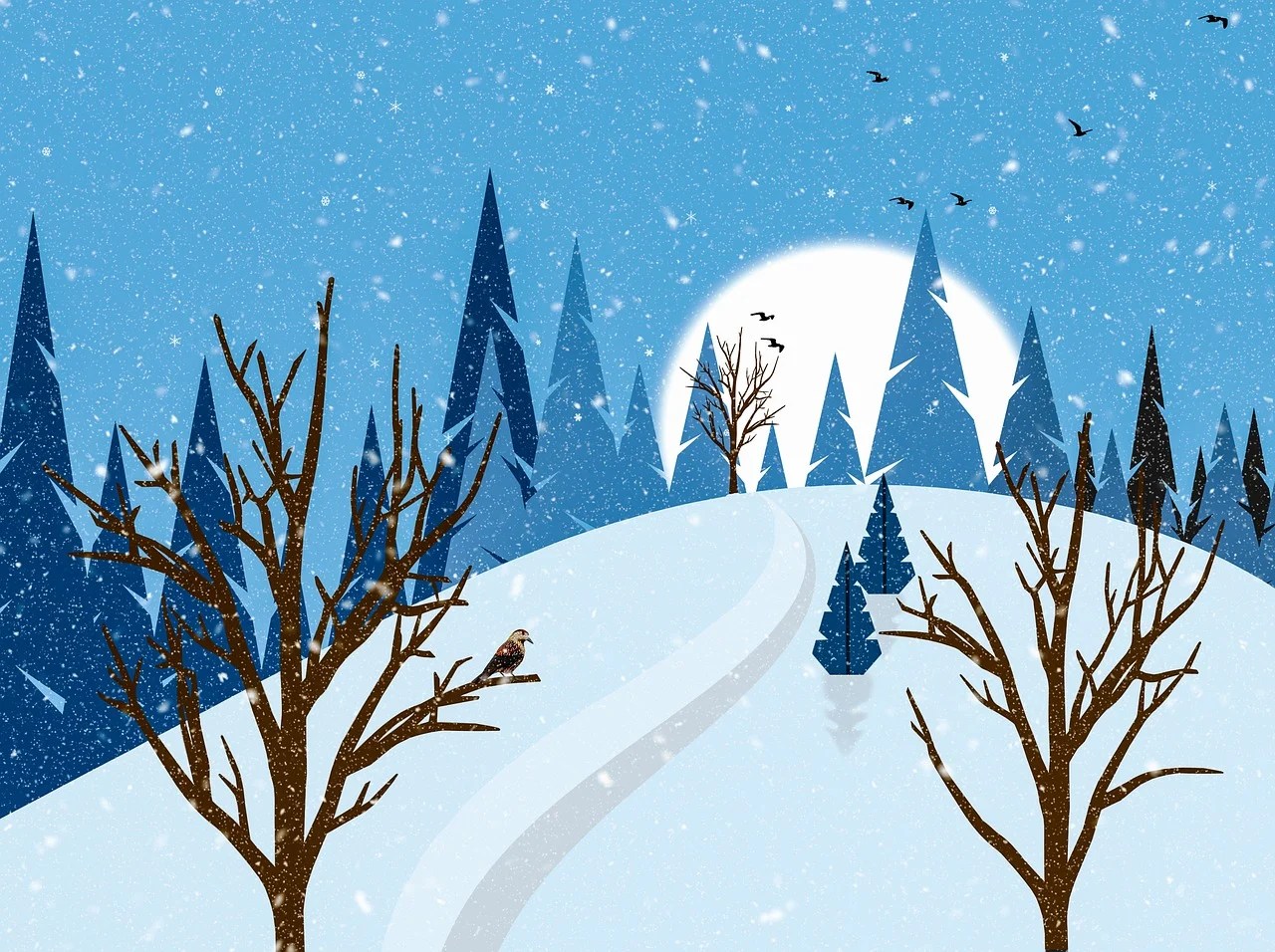
As many of us light the “love” candle this Sunday — the fourth Sunday of Advent — perhaps we will remember the little boy and his snowman in Raymond Brigg’s 1978 children’s book, The Snowman. It is a story of love and loss and magical beauty. In 1982, a British animated adaptation of the book features the hauntingly beautiful song, “Walking in the Air,” by composer Howard Blake. In this music/flying sequence, we are swept up in the magical travels across the sky of the boy and his snowman. The soul-stirring beauty of this song (sung by St. Paul’s Cathedral choir boy, Peter Auty) matched with the tender, pencil-sketched animation lifts us out of our despair for this world, and into a deeper connection with it.

“Walking in the Air” stirs the soul and expands our hearts to the size of the earth itself. Love, indeed! Perhaps such music can save us from the narrow, separate cubicles we tend to inhabit below, and the sense of loneliness and estrangement that rears its head for many during the holidays.

In this song, we are invited to rise above the separate parts, the entrenched views, the narrow focus, and fly into the wideness — the breadth and depth and wholeness of love. The transcendent sky gifts us with a breathtaking vision:  a bird’s-eye-view to explore our connections with people and snowmen and whales and icebergs. High up in the moonlit sky, we are lured by divine imagination into a wider sense of belonging, one that sustains us even in loss.

The image of the little boy and his snowman gliding through the midnight air with hands held tightly reminds me of the tiny baby in the manger and the view that God “dwells in the tender elements in the world, which slowly and in quietness operate by love” (Whitehead). Yes, this is love, the deep and wide heart of Christmas. We need it now more the ever.

So, let’s go walking in the air! Hopefully, you can watch the entire 26-minute film with your family, or simply click below to hear the song by itself. Join me in this musical flight across the world, viewing life from above. A few moments up in the sky can change everything.

We’re walking in the air
We’re floating in the moonlit sky
The people far below
Are sleeping as we fly
I’m holding very tight
I’m riding in the midnight blue
I’m finding I can fly
So high above with you

Far across the world
The villages go by like dreams
The rivers and the hills
The forests and the streams

Children gaze open-mouthed
Taken by surprise
Nobody down below
Believes their eyes

We’re surfing in the air
We’re swimming in the frozen sky
We’re drifting over icy
Mountains floating by

Suddenly swooping low
On an ocean deep
Rousing up a mighty monster
From his sleep

We’re walking in the air
We’re dancing in the midnight sky
And everyone who sees us
Greets us as we fly

The Soul-Expanding Melodies of Sadness

“I have hymns you haven’t heard.” –Rilke

“I want to fight until I don’t feel sad anymore,” cries the young Polish character in the WWII Masterpiece series, World on Fire. The boy had just lost both his mother and his homeland in 1939. It made me wonder, is that why we fight? Do we really think it will abolish our sadness? Fighting might abolish many things, but not our sadness.

What if we could, instead, fully inhabit our sadness in bearable ways? Would it help to give us a wider view of the situation — less narrow, rigid, and vengeful– flowing outward into compassion toward all sides? Would it stop the endless cycles of violence and us-vs-them wars?

Inhabit Your Situation

The Stoic philosopher Epictetus instructed his followers to “inhabit your situation.” Everything was against this great thinker. He was a slave with a physical disability, but he inhabited his situation, and by doing so, he found peace. So, too, in times of war, climate change, injustice, horror, and unbearable loss, we must first fully inhabit — or feel — our situation before we can transform it.

Music can help. So can poetry, prayer, art, a walk in the woods, or a hug from a friend. But in this essay, I will focus on music, for music is the incarnation of pure feeling. Music is our philosopher, our spiritual teacher, our therapist, our whole-making companion in this tragic world — a world hell-bent on grasping, dehumanization, rage, and violence.

Anger, Sadness, and the Divided Brain

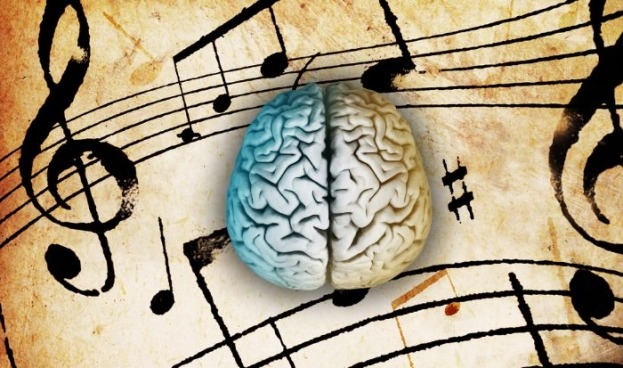
According to the eminent psychiatrist, brain-hemisphere scientist, and philosopher Iain McGilchrist, anger and rage are part of how the left hemisphere “attends” to the world. It sees the world in terms of us and them, black and white. It abstracts rather than connects, prefers grasping and competition rather than cooperation and compassion. It interprets the world in mechanistic terms, leaving no room for spiritual and moral qualities of the soul. The left hemisphere is supposed to be a helper to the right hemisphere by breaking things down into separate parts for study, but the parts don’t make a whole.

McGilchrist describes how the two hemispheres are supposed to work together with the metaphor of music practice:

It is like learning a piece of music: first you are drawn to play it as a whole; then you break it down into bits and practice certain passages and analyse harmonic transitions, and so on; but in the performance all that must once again be set ruthlessly aside, or the results will be disastrous.” (The Divided Brain and the Search for Meaning)

But we often get stuck in the left brain, without returning our attention to the whole — and disaster, indeed, ensues. McGilchrist’s twenty-year research on stroke victims reveals that anger is the single emotion attributed to the left brain with its narrow focus, rigid certainty, manipulation, self-interest — and prime motivation: power (over others).

All this sounds suspiciously like the world we live in today (and what Jesus tried to free us from with his parables). If left-hemisphere anger cannot be processed back into the broader view of the right brain, we get stuck in loops of rage that lead to vengeance, and finally, to self-destruction. This idea begs the question: Has the left brain hijacked our world?

The right hemisphere, on the other hand, attends to the world in quite the opposite way. It is the hemisphere of a wider intelligence, flow, meaning, empathy, sadness, joy, love, creativity, spirituality, humor, music, and poetry — all that makes life worth living. And yet, these aspects of humanity play second-fiddle in our culture.

Something is terribly wrong. It appears that humanity has indeed been usurped by left-hemisphere dominance to the peril of our planet and our humanity. Even our institutions are caught up in this hijacking. Think of all the secondary schools cutting music and art programs, the stubborn dominance of scientific materialism, the entrenchment of religious fundamentalism — the damage is pervasive in our culture.

But there are signs of hope.

Music Connects

In 1999, maestro Daniel Barenboim and the late Palestinian literary scholar Edward W. Said created a workshop for young musicians to promote coexistence and intercultural dialogue. They named the orchestra and workshop after Johann Wolfgang von Goethe’s collection of poems West-Eastern Divan, a central work for the development of the concept of world culture. An equal number of Israeli and Arab musicians form the base of the ensemble, together with members from Turkey, Iran, and Spain. They meet each summer for rehearsals, followed by an international concert tour. In Daniel Barenboim’s words, “the power of music lies in its ability to speak to all aspects of the human being — the animal, the emotional, the intellectual, and the spiritual. Music teaches us, in short, that everything is connected.”

Everything is connected. Music and the arts in general can help restore the balance of our brains — and thus open us to the harmonies of spirituality, connection, cooperation, and beauty. Music helps us reinhabit our right brain with all its promising treasures. The intonations and rhythms of music — with or without words — widens our souls and steeps us in meaning that the left hemisphere knows not of.

Perhaps if we paid compassionate attention to our own sadness with the help of music, we might find within its depths the tender melodies of connection, empathy, and hope that will become contagious.

Our First Language

Music is primal. It was our first language — the true mother tongue. Music preceded referential language in our evolutionary history and is, even now, the language of dolphins and whales and birds. Music, like poetry, helps us move from the left-brain abstractions — including dehumanizing the “other” — into a wider sense of connection to the “other.”

Music expands our souls.

When it comes to sadness, music helps us bear the unbearable. It speaks in wordless feeling, like the maternal lullabies of God — not a distant God “up there” who intervenes now and then, but a loving presence who suffers with us, even while offering us the promise of a new melody, yet to be written. This God cannot control the happenings of this world; rather, “The fault, dear Brutus, lies not in the stars, but in ourselves.” But God’s tender voice persistently sings to us within our suffering, luring us toward fresh possibilities with the rhythm, harmony, and intensity of music.  

Music can help us bear our despair, until it is no longer despair. Until it rises up to form something new and fresh. . . .“I have hymns you haven’t heard.”

If we can let go of our narrow left-brain grasp on rage and revenge, we might dare to enter our own sadness; and if we can fully and safely enter our own sadness, we might venture a little farther out to the sadness of others — even to the sadness of the “other.” If we have the courage to do this, we touch something divine and wholly sacred: We are choosing to share in the very suffering of God.

Hymns We Haven’t Sung

In these frightful times, we need to find more ways to sing together. But this is rare these days, except in our faith communities. Perhaps a focus on music and singing could be the road back for faith communities in decline? Forget the long, well-crafted sermon (says the preacher) and focus on music — all kinds of music! – hymns, songs, and instrumental music that nurtures feelings of openness, love, and hope. And sadness, too. To stay in the flow of process, perhaps fresh hymn lyrics of healing and inclusion can be wedded to old, familiar tunes that no longer speak to us theologically. We need hymns in minor keys, too, that touch our collective sadness in a way that brings connection and hope in our communities.

But we also need to do our individual work of inhabiting our sadness, especially if we are introverts. I suggest a music meditation with something like the intimate melodies of Eric Satie’s Gnossiennes, no. 1-5, a profound work combining East/West intonations which nourish our right hemisphere of connection even as it cradles our sadness in something larger than our sadness.

For meditation practice, be sure to listen all the way through no. 5, as the last one seems to help transition the listener back to a neutral state after a deep dive into the depth of feeling. In this intimate connection to sound and feeling, you will discover a sense of cosmic companionship; that is, your sadness is cradled in something larger than yourself — the divine “fellow-sufferer, who understands” (Whitehead). The hidden melodies inside the sadness will sing to you of hope and transformation.  

For the truth is, if you have the capacity for empathy, you will be sad, especially in times like these. But once you fully inhabit your sadness, you will see that there is more than simply sadness. Sadness has other close friends like compassion, joy, hilarity, beauty, and hope.

Inhabiting your sadness through music will nourish your right brain, widen your soul, and help you develop the ability to transform anger into compassionate action rather than fighting and vengeance. Music connects us not only to one another, but to the “other,” and to the deeper divine melodies of hope and possibility. 

Finally, look for novelty in the way you feel. One comment under this particular video (below) states: “When I heard Gnossienne no. 1 for the first time, I basically unlocked a new emotion/feeling.”

Oh, yes, there are hymns we have not heard!  Are you listening?

**This essay was first published on Spirituality and Practice, October 22, 2023