Miss Harbottle’s Big Mistake (And Why it Matters to Us)

The enchanting Masterpiece series All Creatures Great and Small features a crochety but loveable Yorkshire vet, Siegfried, and his brilliant young partner, James. In this series, based on the real-life stories of James Herriot, the two vets have a policy of “putting the animal first,” that is, above profit. Yes, it’s rather scandalous — even in the 1940s — for profit to be put on the backburner in favor of living, breathing animals. But it’s not just cows and goats and dogs that come first. Their compassion for the animals’ owners require the two vets to be flexible on occasion — that is, to accept jam and eggs and the odd chicken as payment when they really need hard cash. But they do it because they not only care for the animals; they also see the fuller picture of community well-being and the need for caring for their neighbors. They live within the creative tension of compassion and making ends meet.

But of course, these beloved characters are imperfect like the rest of us, so sometimes they make the wrong call. Such was the case in Season 4, in which Siegfried, overcome with the tyranny of mounting paperwork and general office chaos, decides to hire Miss Harbottle, an uber efficient secretary, to come in and straighten up things. Sounds perfectly reasonable, right?

Miss Harbottle certainly cleans up and organizes the chaos. But in the process, she begins to take control of everything, telling the doctors what they could and could not do, taking over Siegfried’s own office as her own, and generally alienating everyone with her rigid rules and domineering ways. On her first day, Miss Harbottle takes a disgusting dislike to Siegfried’s beloved pet rat, Volonel, whose cage sits next to his desk, and takes it upon herself to banish Volonel to a dark back room.

This would not stand! Siegfried returns Volonel to his proper place and even tries to muster the courage to fire Miss Harbottle. But alas, his resolve crumbles against her rigid, manipulative dominance.

One day, a man named Joe Coyne brings in his little white ferret, Wilf, who is suffering from a lump on his skin and needs surgery. Miss Harbottle turned him away for not making “a proper appointment” or paying in advance (her new policy). Joe stomped away with his ferret in tow, vowing never to return.

That act proves to be Miss Harbottle’s undoing. Because the “animals first” policy is so brutally disrespected, James and Siegfried conspire to bring Wilf in for surgery after Miss Harbottle leaves for the evening. But alas, the formidable Harbottle returns for the post she had forgotten and encounters this “unauthorized” operation in progress. Livid, she decries, “You went against my authority!” Upon which Siegfried responds, “an authority I should have never relinquished.”

Of course, Miss Harbottle is dismissed on the spot and life returns to its normal creative chaos. An entertaining story, for sure, but it also reminds us of the tensions within human nature and, on a deeper, spiritual level, reveals something of what is wrong with the world even now.

Miss Harbottle as Metaphor

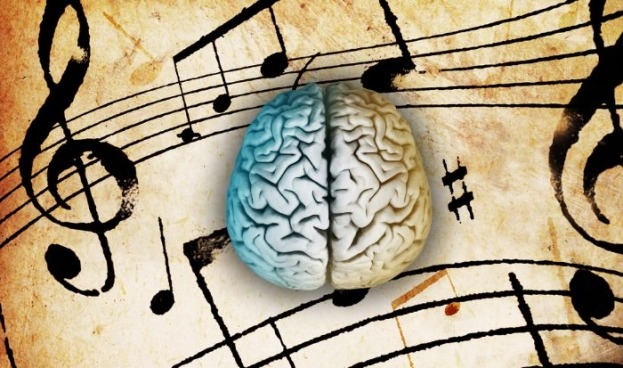
Miss Harbottle is the perfect metaphor for what philosopher, psychiatrist, and neuroscientist Iain McGilchrist calls “left-hemisphere dominance.”  His “hemisphere hypothesis” is that the left hemisphere of our divided brain has an important role to play in our lives, but it is a limited one that serves the broader view of the right hemisphere — like a camera zooming in to grasp, isolate, and manipulate (left-hemisphere) and then zooming out to see the larger context (right hemisphere). We need both perspectives in order to survive and thrive. The problem comes when the left hemisphere goes rogue and takes over (i.e., Miss Harbottle). When this happens, we lose perspective and life becomes mechanical, shallow, literal, fragmented, and lifelessly static.

Like Miss Harbottle, the left-hemisphere simply can’t see the whole picture, the broader context, and the relational aspects of existence. It believes it is always right, seeks to control, and gets angry when confronted (anger being the prime emotion of the left-hemisphere).

When we (individuals or whole societies) allow this part of our thinking to be our dominant view of reality, we become rigid and limited in our thinking, cut off from the real world of flesh and blood and feeling, and from the spiritual world that gives meaning and purpose. We are inviting tyranny into our lives.

McGilchrist does not reduce the mind to the physical brain as do scientific materialists, but rather sees the brain’s two hemispheres as a physical home for our consciousness. How we use our brains becomes a moral and spiritual choice. As his decades of research shows, we can open ourselves to meaning, spirituality, and beauty only when our brains are balanced, with the right hemisphere being the master and the left, the helper.

In his massive (and massively important) work The Master and His Emissary, he tells a fable which could easily be Siegfried and Miss Harbottle: a master becomes overcome with too much work to handle and hires an emissary to help. But the emissary begins to take over. In the process, life — human, animal, creation — along with compassion and an intelligent sense of the broader picture is lost in the small and narrow focus of left-hemisphere tyranny. Relations are fractured, rigidity rules, and catastrophe ensues.

Miss Harbottle’s big mistake was not her efficiency and skill, which was sorely needed, but her desire to take over with rigid rules that look good in the abstract, but fail miserably in reality. She failed to see herself as a “helper” and took control over the vet practice, leaving soured feelings and fractured relationships. She couldn’t see the larger context in which she worked — the real world of struggling country folk, suffering animals, and delicate village relationships.

When the left hemisphere overreaches its authority and does not return attention (zoom out) to the larger, living, breathing, interconnected world, bad things happen. Devoid of the right hemisphere’s larger, more intelligent and contextual view of things, farmers and ferrets become mere numbers and abstractions rather than living beings.

The sense of interconnection, flow, and all the values of the spiritual life are lost in the emissary’s grasp for power. Our openness to the Divine and to the higher values of goodness, truth, and beauty — all that makes life meaningful — depends on our choice to return our focus to the master, i.e., the right hemisphere. But how?

A is for Attention

McGilchrist emphasizes that the brain hemispheres attend to the world differently, and that, yes, we have a moral choice in the matter. Like Siegfried, the modern world has relinquished much of its power to the emissary. It appears we are stuck with the tyranny of Miss Harbottle until we have the courage to push back and make moral choices that bring our brain hemispheres into balance, opening us up to the richness and depth of love, beauty, and compassion above the rigid, narrow focus on money, power, and control. It will take a change of viewpoint — of attention — and some soul-searching to rediscover what matters.

Another way of putting it: we need to enlarge our souls for the sake of the world. The right hemisphere’s take on the world is broadening and well-rounded, while the left hemisphere lacks depth, complexity, and flexibility. So perhaps enlarging our attention is the first step to enlarging our souls. After all, “A” is for attention in the “Alphabet of Spirit Literacy.” Perhaps it is first in importance, too, or at least foundational to all the other spiritual values. If we choose to attend to the world of left-hemisphere narrowness, we will be impoverished to the point of putting our very existence in peril. The spiritual part of us needs the right hemisphere’s way of attending: seeing the whole context, the flow, and the relationality of God and the world. None of this makes sense to the rigid, literal, and abstract oriented left-hemisphere.

The Courage to Push Back

The struggle between Miss Harbottle’s narrow approach to the world and Siegfried’s attention to larger issues serves not only as a cautionary tale but an insight into our humanity and what we must regain in order to survive these perilous times. Many of our religious and spiritual values have fallen by the wayside — or been usurped by false prophets. By fattening our souls rather than our wallets, by enlarging our experiences with nature, art, and face-to-face interactions, and by broadening our minds to learn and listen to the views of the “other,” we might just regain our humanity and survive as a species. But it’s going to be an uphill battle. The Miss Harbottles of this world are a formidable lot!

But there is hope. In our story, when things fell apart in the vet practice, Siegfried had the courage to admit he was wrong in relinquishing his authority to Miss Harbottle. He was finally able to push back against the tyranny and return to his foundational values of relationships and compassion over profit and power. Yes, Siegfried had the courage to return his attention to what really matters. The question is: Do we?


Walking in the Air: An Advent Music Meditation

We’re walking in the air
We’re floating in the moonlit sky
The people far below
Are sleeping as we fly
I’m holding very tight
I’m riding in the midnight blue
I’m finding I can fly
So high above with you

— from the movie The Snowman, Howard Blake

As many of us light the “love” candle this Sunday — the fourth Sunday of Advent — perhaps we will remember the little boy and his snowman in Raymond Brigg’s 1978 children’s book, The Snowman. It is a story of love and loss and magical beauty. In 1982, a British animated adaptation of the book features the hauntingly beautiful song, “Walking in the Air,” by composer Howard Blake. In this music/flying sequence, we are swept up in the magical travels across the sky of the boy and his snowman. The soul-stirring beauty of this song (sung by St. Paul’s Cathedral choir boy, Peter Auty) matched with the tender, pencil-sketched animation lifts us out of our despair for this world, and into a deeper connection with it.

“Walking in the Air” stirs the soul and expands our hearts to the size of the earth itself. Love, indeed! Perhaps such music can save us from the narrow, separate cubicles we tend to inhabit below, and the sense of loneliness and estrangement that rears its head for many during the holidays.

In this song, we are invited to rise above the separate parts, the entrenched views, the narrow focus, and fly into the wideness — the breadth and depth and wholeness of love. The transcendent sky gifts us with a breathtaking vision:  a bird’s-eye-view to explore our connections with people and snowmen and whales and icebergs. High up in the moonlit sky, we are lured by divine imagination into a wider sense of belonging, one that sustains us even in loss.

The image of the little boy and his snowman gliding through the midnight air with hands held tightly reminds me of the tiny baby in the manger and the view that God “dwells in the tender elements in the world, which slowly and in quietness operate by love” (Whitehead). Yes, this is love, the deep and wide heart of Christmas. We need it now more the ever.

So, let’s go walking in the air! Hopefully, you can watch the entire 26-minute film with your family, or simply click below to hear the song by itself. Join me in this musical flight across the world, viewing life from above. A few moments up in the sky can change everything.

We’re walking in the air
We’re floating in the moonlit sky
The people far below
Are sleeping as we fly
I’m holding very tight
I’m riding in the midnight blue
I’m finding I can fly
So high above with you

Far across the world
The villages go by like dreams
The rivers and the hills
The forests and the streams

Children gaze open-mouthed
Taken by surprise
Nobody down below
Believes their eyes

We’re surfing in the air
We’re swimming in the frozen sky
We’re drifting over icy
Mountains floating by

Suddenly swooping low
On an ocean deep
Rousing up a mighty monster
From his sleep

We’re walking in the air
We’re dancing in the midnight sky
And everyone who sees us
Greets us as we fly

The Soul-Expanding Melodies of Sadness

“I have hymns you haven’t heard.” –Rilke

“I want to fight until I don’t feel sad anymore,” cries the young Polish character in the WWII Masterpiece series, World on Fire. The boy had just lost both his mother and his homeland in 1939. It made me wonder, is that why we fight? Do we really think it will abolish our sadness? Fighting might abolish many things, but not our sadness.

What if we could, instead, fully inhabit our sadness in bearable ways? Would it help to give us a wider view of the situation — less narrow, rigid, and vengeful– flowing outward into compassion toward all sides? Would it stop the endless cycles of violence and us-vs-them wars?

Inhabit Your Situation

The Stoic philosopher Epictetus instructed his followers to “inhabit your situation.” Everything was against this great thinker. He was a slave with a physical disability, but he inhabited his situation, and by doing so, he found peace. So, too, in times of war, climate change, injustice, horror, and unbearable loss, we must first fully inhabit — or feel — our situation before we can transform it.

Music can help. So can poetry, prayer, art, a walk in the woods, or a hug from a friend. But in this essay, I will focus on music, for music is the incarnation of pure feeling. Music is our philosopher, our spiritual teacher, our therapist, our whole-making companion in this tragic world — a world hell-bent on grasping, dehumanization, rage, and violence.

Anger, Sadness, and the Divided Brain

According to the eminent psychiatrist, brain-hemisphere scientist, and philosopher Iain McGilchrist, anger and rage are part of how the left hemisphere “attends” to the world. It sees the world in terms of us and them, black and white. It abstracts rather than connects, prefers grasping and competition rather than cooperation and compassion. It interprets the world in mechanistic terms, leaving no room for spiritual and moral qualities of the soul. The left hemisphere is supposed to be a helper to the right hemisphere by breaking things down into separate parts for study, but the parts don’t make a whole.

McGilchrist describes how the two hemispheres are supposed to work together with the metaphor of music practice:

It is like learning a piece of music: first you are drawn to play it as a whole; then you break it down into bits and practice certain passages and analyse harmonic transitions, and so on; but in the performance all that must once again be set ruthlessly aside, or the results will be disastrous.” (The Divided Brain and the Search for Meaning)

But we often get stuck in the left brain, without returning our attention to the whole — and disaster, indeed, ensues. McGilchrist’s twenty-year research on stroke victims reveals that anger is the single emotion attributed to the left brain with its narrow focus, rigid certainty, manipulation, self-interest — and prime motivation: power (over others).

All this sounds suspiciously like the world we live in today (and what Jesus tried to free us from with his parables). If left-hemisphere anger cannot be processed back into the broader view of the right brain, we get stuck in loops of rage that lead to vengeance, and finally, to self-destruction. This idea begs the question: Has the left brain hijacked our world?

The right hemisphere, on the other hand, attends to the world in quite the opposite way. It is the hemisphere of a wider intelligence, flow, meaning, empathy, sadness, joy, love, creativity, spirituality, humor, music, and poetry — all that makes life worth living. And yet, these aspects of humanity play second-fiddle in our culture.

Something is terribly wrong. It appears that humanity has indeed been usurped by left-hemisphere dominance to the peril of our planet and our humanity. Even our institutions are caught up in this hijacking. Think of all the secondary schools cutting music and art programs, the stubborn dominance of scientific materialism, the entrenchment of religious fundamentalism — the damage is pervasive in our culture.

But there are signs of hope.

Music Connects

In 1999, maestro Daniel Barenboim and the late Palestinian literary scholar Edward W. Said created a workshop for young musicians to promote coexistence and intercultural dialogue. They named the orchestra and workshop after Johann Wolfgang von Goethe’s collection of poems West-Eastern Divan, a central work for the development of the concept of world culture. An equal number of Israeli and Arab musicians form the base of the ensemble, together with members from Turkey, Iran, and Spain. They meet each summer for rehearsals, followed by an international concert tour. In Daniel Barenboim’s words, “the power of music lies in its ability to speak to all aspects of the human being — the animal, the emotional, the intellectual, and the spiritual. Music teaches us, in short, that everything is connected.”

Everything is connected. Music and the arts in general can help restore the balance of our brains — and thus open us to the harmonies of spirituality, connection, cooperation, and beauty. Music helps us reinhabit our right brain with all its promising treasures. The intonations and rhythms of music — with or without words — widens our souls and steeps us in meaning that the left hemisphere knows not of.

Perhaps if we paid compassionate attention to our own sadness with the help of music, we might find within its depths the tender melodies of connection, empathy, and hope that will become contagious.

Our First Language

Music is primal. It was our first language — the true mother tongue. Music preceded referential language in our evolutionary history and is, even now, the language of dolphins and whales and birds. Music, like poetry, helps us move from the left-brain abstractions — including dehumanizing the “other” — into a wider sense of connection to the “other.”

Music expands our souls.

When it comes to sadness, music helps us bear the unbearable. It speaks in wordless feeling, like the maternal lullabies of God — not a distant God “up there” who intervenes now and then, but a loving presence who suffers with us, even while offering us the promise of a new melody, yet to be written. This God cannot control the happenings of this world; rather, “The fault, dear Brutus, lies not in the stars, but in ourselves.” But God’s tender voice persistently sings to us within our suffering, luring us toward fresh possibilities with the rhythm, harmony, and intensity of music.  

Music can help us bear our despair, until it is no longer despair. Until it rises up to form something new and fresh. . . .“I have hymns you haven’t heard.”

If we can let go of our narrow left-brain grasp on rage and revenge, we might dare to enter our own sadness; and if we can fully and safely enter our own sadness, we might venture a little farther out to the sadness of others — even to the sadness of the “other.” If we have the courage to do this, we touch something divine and wholly sacred: We are choosing to share in the very suffering of God.

Hymns We Haven’t Sung

In these frightful times, we need to find more ways to sing together. But this is rare these days, except in our faith communities. Perhaps a focus on music and singing could be the road back for faith communities in decline? Forget the long, well-crafted sermon (says the preacher) and focus on music — all kinds of music! – hymns, songs, and instrumental music that nurtures feelings of openness, love, and hope. And sadness, too. To stay in the flow of process, perhaps fresh hymn lyrics of healing and inclusion can be wedded to old, familiar tunes that no longer speak to us theologically. We need hymns in minor keys, too, that touch our collective sadness in a way that brings connection and hope in our communities.

But we also need to do our individual work of inhabiting our sadness, especially if we are introverts. I suggest a music meditation with something like the intimate melodies of Eric Satie’s Gnossiennes, no. 1-5, a profound work combining East/West intonations which nourish our right hemisphere of connection even as it cradles our sadness in something larger than our sadness.

For meditation practice, be sure to listen all the way through no. 5, as the last one seems to help transition the listener back to a neutral state after a deep dive into the depth of feeling. In this intimate connection to sound and feeling, you will discover a sense of cosmic companionship; that is, your sadness is cradled in something larger than yourself — the divine “fellow-sufferer, who understands” (Whitehead). The hidden melodies inside the sadness will sing to you of hope and transformation.  

For the truth is, if you have the capacity for empathy, you will be sad, especially in times like these. But once you fully inhabit your sadness, you will see that there is more than simply sadness. Sadness has other close friends like compassion, joy, hilarity, beauty, and hope.

Inhabiting your sadness through music will nourish your right brain, widen your soul, and help you develop the ability to transform anger into compassionate action rather than fighting and vengeance. Music connects us not only to one another, but to the “other,” and to the deeper divine melodies of hope and possibility. 

Finally, look for novelty in the way you feel. One comment under this particular video (below) states: “When I heard Gnossienne no. 1 for the first time, I basically unlocked a new emotion/feeling.”

Oh, yes, there are hymns we have not heard!  Are you listening?

**This essay was first published on Spirituality and Practice, October 22, 2023

Beauty in the Dark

Let this darkness be a bell tower
and you the bell. As you ring,

What batters you becomes your strength.
Move back and forth into the change.
What is it like, such intensity of pain?
If the drink is bitter, turn yourself to wine.

–Rainer Maria Rilke, from Sonnets to Orpheus II, 29

On my last Sunday as a working minister, the choir in our congregation sang the soulful Irish hymn Be Thou My Vision. I sat rapt behind the pulpit, deeply moved, juxtaposing my own struggles with advanced glaucoma with this spiritual invitation to a wider vision. For the truth is, my physical vision is narrowing into darkness, year by year, despite all medical interventions to date. The encroaching darkness has grounded me from driving, nudged me into unplanned retirement, and makes it difficult to read or move about without fear of bodily injury. There’s no getting round the natural human reaction of distress and fear of going completely blind, feelings which I know must be fully felt as I “move back and forth” into the change. 

But there is more to vision, isn’t there? Perhaps this is where “the bitter drink” transforms me into wine, After all, there is the unseen, the spiritual, the inner vision that transcends our five senses. Helen Keller displayed remarkable vision and hearing even though being deaf and blind. She could “see” the beauty of the world in ways we can’t imagine and she “heard” music through feeling vibrations. Beethoven heard music in his mind when he grew deaf, creating the Ninth Symphony, his magnum opus. Keller and Beethoven were drawn to the spiritual world and the world of beauty and music. Such luminaries remind me of the untapped possibilities beyond the five senses. This is possible because the reality we live in is much larger and more interesting than we once believed.

In the world of David Hume, rock star of the Scottish Enlightenment, we can only know what we perceive through our five senses. But after the revolution in science in the early twentieth century, we see that quantum physics opened us to a much more interesting view of reality for both scientists and philosophers. The great philosopher and mathematician, Alfred North Whitehead, taking this new reality of the invisible world of quanta into account, proposed that the world of knowing (epistemology) is much larger than the five senses, and includes the Divine presence, too.

God is present in the world in a most intimate way, but is also more than the world (panentheism). That “moreness” may be something we experience more fully after this life: a holy reality called by many names: heaven, paradise, the depths of God. I find it fascinating that so many of those who have reported Near Death Experiences reveal common stories not only of radiant light but also of a loving, embracing darkness at the core of everything. The womb of God? Perhaps.

But here we are, adventurers in this earthly experience, struggling to find our way together  —  some of us stumbling over furniture and cats as we lose light and clarity. We all struggle against the darkness, either metaphorically or literally. But there is good news, too, which was my joy as a minister to share with others:  Within this ever-expanding universe, God is present in every droplet of experience, luring us to incarnate possibilities for beauty and wholeness. God feels my experience with me — even the frustration and fear — and within this deep knowing, fashions fresh possibilities for ongoing novel experiences and new ways of knowing the world.

And so, if my visual darkness is to be a bell tower, then, with a little effort on my part, I can become the bell, ringing out a new song, enlarging my soul, discovering fresh adventures of the spirit. Part of this transformation includes the other four senses: will I learn to hear with more sensitivity? But more than this, there is an invisible realm to the world, and that includes the presence of divinity in every unfolding moment.

I love the God of process theology, who is “the fellow sufferer, who understands.” This intimate Companion — Soul of the world– is the source of novelty and creativity in the universe. And yet, God is invisible. So much of what matters is invisible, like the music of bells and the experience of love.

The visible and invisible unfold together inside a divine yearning for beauty — improvising, uncertain in every way, and often tragic. The whole cosmic process is enticingly mysterious. Besides the world of energy events that make up what we think of as matter, 95 % of the universe is dark matter and dark energy: dark matter holds everything together in an invisible embrace while dark energy hastens the expansion of the universe. What a contrasting pair of invisible friends! While science probes this mystery with the launch of Europe’s Euclid space telescope, we will perhaps find something that ignites the next scientific revolution. In this universe of wonder and beauty, we know that something important happens in the dark.

We continue to evolve with deeper insights in science, philosophy, psychology, theology, and in every area of human endeavor. But one thing we know now: we are not limited to the five senses. Reality is larger and more interesting than we can imagine! This gives me solace on bad days. Instead of feeling that I am losing something while my world gets narrower and darker, I can “look” with my inner vision to turn “disability” into possibility.

I really hope for a cure for glaucoma in my lifetime, but thanks to my moorings in process theology, I know that whatever happens, I have deep reservoirs for “seeing” with spiritual eyes, for expanding my soul, and for discovering a whole new realm of beauty in the darkness.

Rocking Chair Meditation

I rock. Everyday. Sometimes twice a day — every time I get a chance. I particularly like to rock in the dark, before bedtime, as it works better than sleeping pills. My rocking chair has become my favorite place to read, to dream, to chat with a friend, to listen to music, to drink tea – carefully — and yes, to meditate. I rock away stress, bad news, obsessive thoughts, back pain, and the despair of this world.

After rocking for only a few weeks in my Amish-made wooden rocker, I am convinced that the humble rocking chair may just be one of the most enjoyable ways to love the body, refresh the spirit, and calm the excessive anxiety in these difficult times.

Rocking with God

Of course, the rocking chair has sterling reviews from health experts for improving the three M’s: mind, muscles, and mood. As a theologian and spiritual practitioner, I find that the rocking chair can aid in three more M’s: meditation, metaphor, and meaning.

According to Alfred North Whitehead, God “dwells in the tender elements in the world, which slowly and in quietness operate by love.” The rocking chair is the perfect place to meditate on God’s tenderness and love. If we understand God as creative, unconditional, nurturing Love, then what could be more appropriate for a spiritual practice than allowing ourselves moments that touch on those feelings? Think of yourself as an infant being cradled, rocked, and calmed. Such cradling Love whispers to us: You are loved. You are cherished. You are cared for.

We all need this reassurance, especially in times of fear, transition, and loss. Sometimes we just need it for no reason other than countering the years of shadowy, unloving voices in our heads that whisper: I’m not worthy of love; I’m not enough

Rocking reminds me that there is more than gun violence and climate change and insane politics. There is always a place of refreshment and peace within. Even hope. The movement of the rocking chair renews my faith in the openness of the future – “the creative advance into novelty” (Whitehead).

With the infant’s cradle as a picture of God’s tenderness, the gentle to-and-fro rhythm of the rocker can be a place of peace and refuge. All of us yearn to be tucked into the cradle of divine love!

When I rock, I am also reminded of the meaning of my life: a co-creator with God, unfolding in love and wisdom and beauty for the sake of the world. We often say something or someone “rocked my world.”  That’s because it moves us, gets us out of our static sense of ourselves, changes us, gives life meaning and purpose. I loved to be rocked: rocked by the dazzle of the universe as seen in the Webb photos from space, rocked by kindness, rocked by new ideas, rocked by beauty. What meaning rocks your world?

Co-Rockers in a Rocking Universe

In a rocking chair, we are not rocking on our own power alone; nor are we being rocked passively. In every gentle rock, we join the Divine to-and-fro rhythm of receiving/creating, receiving/creating. With our feet pushing us up into the arc of motion, we let go to the gentle flow of life unfolding in the sweet rhythm of a lullaby. Gentle movement carries us safely backward and forward again. Each lift of the heel is a Yes! to the ongoing flow of life.

As in walking meditation, rocking meditation asks us to pay attention to movement. But here the feet lift gently to create the regular rhythm that keeps our minds focused. 

Every repetition seems to be exactly like the last one, but it is different, each one. Like occasions of experience unfolding, one after the other, the window of the soul opens to the flow of fresh offerings. Like the gentle rock of a boat on a river, our rocking can take us into deeper depths of love. 

Hard Rock, Soft Rock

When we rock hard – big motions and feet off the floor — we sense joy flooding through our body as the blood circulates and muscles strengthen. When we rock soft and small with the gentlest of movement, we can sense the rhythm of a heartbeat — much like our mother’s heartbeat in the womb.

This heartbeat rhythm reminds us that we are inside God as much as God is inside us. The womb of God is filled with the steady heartbeat that moves through Universe, creating stars and immortal music, bringing lovers together in union, and giving song to the blackbird. 

Rocking Meditation Practice

Now find a comfortable rocking chair, sit down, and begin rocking. Take some deep breaths, close your eyes, and notice the rhythm of your rock. Do you choose “hard rock” or “soft rock”? Try some of both. Finally choose a comfortable rhythm and focus your attention on the forward/back motion, letting all thoughts gently fall away as you keep your attention on the motion and rhythm of your rock. Now try a few of your favorite spiritual affirmations. You might want to include these:

I am cradled in Divine Love.

I am safe.

I am loved.

I am cared for.

I move with the Spirit.

I am unfolding, moment by moment.

My heart beats with all the creatures of the world.

My heart beats with the heart of God.

I am deeply connected to everything in the Universe.

Now, if you find comfort in singing, why not sing yourself a lullaby? If you don’t like to sing, listen to lullabies with headphones, especially if the child within you is hurting and scared.

Keep Rocking On

If we are sad or suffering, we can preface our affirmations with: “Even though I feel sad, I am cradled in Divine Love,” and so on.

We know that in this relational world of free will and shared power, suffering is never God’s doing—or allowance; on the contrary, God’s heart breaks over the broken shards of unnecessary violence and needless suffering; But we also know that God’s heart is big enough to hold not only heartache but healing, too — and transformation and resurrection and fresh possibilities beyond our imagination.

We might even learn through the steady rhythm of rocking that our own hearts are bigger than we think: stronger and more resilient than we imagined, and even able move forward with hope amid sadness and discouragement.

When we spend a few moments in rocking meditation, we are ready to offer this same love and reassurance to those around us; we become a new creation, ready to rock the world with who we are and what we have to give.

Come what may, we keep rocking on.

Also published in Spirituality & Practice and Open Horizons