Unknown's avatar

About pafarmer

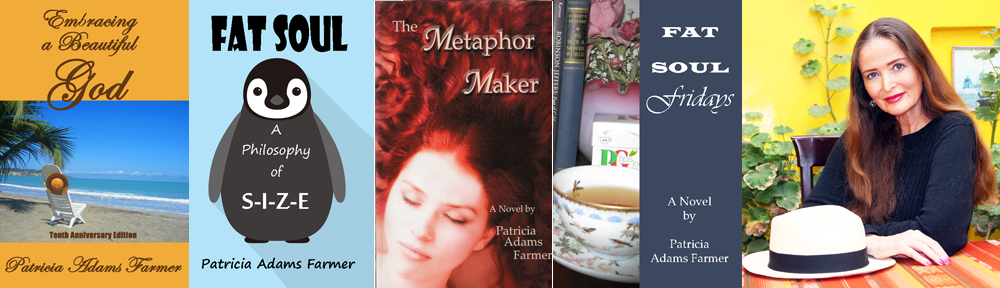
Patricia Adams Farmer is a pastor, writer, animal lover, chocolate enthusiast, classical guitarist, and author of several books in the areas of spirituality and process theology. Check out a complete list of her essays on Open Horizons (openhorizons.org) and her "Process Musings" blog posts at Spirituality & Practice (spiritualityandpractice.com),

Beauty in the Dark

Let this darkness be a bell tower
and you the bell. As you ring,

What batters you becomes your strength.
Move back and forth into the change.
What is it like, such intensity of pain?
If the drink is bitter, turn yourself to wine.

–Rainer Maria Rilke, from Sonnets to Orpheus II, 29

On my last Sunday as a working minister, the choir in our congregation sang the soulful Irish hymn Be Thou My Vision. I sat rapt behind the pulpit, deeply moved, juxtaposing my own struggles with advanced glaucoma with this spiritual invitation to a wider vision. For the truth is, my physical vision is narrowing into darkness, year by year, despite all medical interventions to date. The encroaching darkness has grounded me from driving, nudged me into unplanned retirement, and makes it difficult to read or move about without fear of bodily injury. There’s no getting round the natural human reaction of distress and fear of going completely blind, feelings which I know must be fully felt as I “move back and forth” into the change. 

But there is more to vision, isn’t there? Perhaps this is where “the bitter drink” transforms me into wine, After all, there is the unseen, the spiritual, the inner vision that transcends our five senses. Helen Keller displayed remarkable vision and hearing even though being deaf and blind. She could “see” the beauty of the world in ways we can’t imagine and she “heard” music through feeling vibrations. Beethoven heard music in his mind when he grew deaf, creating the Ninth Symphony, his magnum opus. Keller and Beethoven were drawn to the spiritual world and the world of beauty and music. Such luminaries remind me of the untapped possibilities beyond the five senses. This is possible because the reality we live in is much larger and more interesting than we once believed.

In the world of David Hume, rock star of the Scottish Enlightenment, we can only know what we perceive through our five senses. But after the revolution in science in the early twentieth century, we see that quantum physics opened us to a much more interesting view of reality for both scientists and philosophers. The great philosopher and mathematician, Alfred North Whitehead, taking this new reality of the invisible world of quanta into account, proposed that the world of knowing (epistemology) is much larger than the five senses, and includes the Divine presence, too.

God is present in the world in a most intimate way, but is also more than the world (panentheism). That “moreness” may be something we experience more fully after this life: a holy reality called by many names: heaven, paradise, the depths of God. I find it fascinating that so many of those who have reported Near Death Experiences reveal common stories not only of radiant light but also of a loving, embracing darkness at the core of everything. The womb of God? Perhaps.

But here we are, adventurers in this earthly experience, struggling to find our way together  —  some of us stumbling over furniture and cats as we lose light and clarity. We all struggle against the darkness, either metaphorically or literally. But there is good news, too, which was my joy as a minister to share with others:  Within this ever-expanding universe, God is present in every droplet of experience, luring us to incarnate possibilities for beauty and wholeness. God feels my experience with me — even the frustration and fear — and within this deep knowing, fashions fresh possibilities for ongoing novel experiences and new ways of knowing the world.

And so, if my visual darkness is to be a bell tower, then, with a little effort on my part, I can become the bell, ringing out a new song, enlarging my soul, discovering fresh adventures of the spirit. Part of this transformation includes the other four senses: will I learn to hear with more sensitivity? But more than this, there is an invisible realm to the world, and that includes the presence of divinity in every unfolding moment.

I love the God of process theology, who is “the fellow sufferer, who understands.” This intimate Companion — Soul of the world– is the source of novelty and creativity in the universe. And yet, God is invisible. So much of what matters is invisible, like the music of bells and the experience of love.

The visible and invisible unfold together inside a divine yearning for beauty — improvising, uncertain in every way, and often tragic. The whole cosmic process is enticingly mysterious. Besides the world of energy events that make up what we think of as matter, 95 % of the universe is dark matter and dark energy: dark matter holds everything together in an invisible embrace while dark energy hastens the expansion of the universe. What a contrasting pair of invisible friends! While science probes this mystery with the launch of Europe’s Euclid space telescope, we will perhaps find something that ignites the next scientific revolution. In this universe of wonder and beauty, we know that something important happens in the dark.

We continue to evolve with deeper insights in science, philosophy, psychology, theology, and in every area of human endeavor. But one thing we know now: we are not limited to the five senses. Reality is larger and more interesting than we can imagine! This gives me solace on bad days. Instead of feeling that I am losing something while my world gets narrower and darker, I can “look” with my inner vision to turn “disability” into possibility.

I really hope for a cure for glaucoma in my lifetime, but thanks to my moorings in process theology, I know that whatever happens, I have deep reservoirs for “seeing” with spiritual eyes, for expanding my soul, and for discovering a whole new realm of beauty in the darkness.

Our Souls Are a River

What a joy for me to discover Australian poet and publisher, David Tensen! I ran across this poem on Facebook and was thrilled to see that it’s called “Fat Soul” and, in his words, “was inspired by Patricia Adams Farmer and Bernard Loomer’s Fat Soul Theology.” This poem ushers us into the world of flowing soul and expanding awareness, freedom, and generosity. Enjoy and share with all those who want to be “a big fat and generous soul”!

Our souls are a river in flow

whose banks and bed are built

by every interaction.

Whose ways and waters change

with every passing breath.

I want to be a wide river.

Not a narrow brook you simply step over and forget.

But wide enough to be considered before crossing.

I want to be a slow river.

Not an ocean so wild the innocent dare not enter.

But slow enough that even the lame feel safe to wade in.

I want to be a deep river.

Full of life and nourishment.

Moving through nations with many streams.

Unable to be dammed by dogma or doubt.

One day…

One fine and inevitable day

we will find ourselves emptied out.

Emptied out into the Great Ocean of Things

adding to it our own minuscule moment.

But until that moment.

Until the moment my soul ceases

to be held as this body,

the kind of soul I want to be

-I really want to be –

is a fat soul.

A big fat and generous soul.

‘Fat Soul’

David Tensen

Inspired by Patricia Adams Farmer and Bernard Loomer’s Fat Soul Theology

*David is the author of five books and founder of Poetry Chapel Press. To learn more about David Tenson’s work and services, go to his quicklinks page or his website, davidtenson.com. You can also find this talented fat soul on Instagram and Facebook!

Waylaid by Beauty

On a casual spring walk “I am waylaid by Beauty” in the spirit of the poet Edna St. Vincent Millay. The bursting redbud trees, fluting birdsong, and waving daffodils toss my rambling thoughts to the wind and invite me into their world for a moment of feeling. This feeling has the flavor of something larger and more enduring and hopeful than me, myself, and I. In an instant, I lose my sense of individual self-enclosure and I go wide, feeling the world as part of myself and more than myself. Such simple spring beauty connects me with the very tenderness of God, and it feeds me for hours, days, a lifetime.

One moment of drinking in beauty, and my thirst for belonging is quenched. It seems to me that beauty is a portal to that Great Togetherness, for as the philosopher Roland Faber says, “We are the togetherness of everything.” (The Mind of Whitehead, p. 33)

Beauty in all its forms opens us to the “togetherness of everything.” Traveling down a country road, listening to Murray Perahia play Bach’s Keyboard Concerto No. 1, I am swept away in a depth of feeling that surges up from centuries past. I feel that I am touching the mind of Bach himself — feeling what he felt —  alive to the divine inspiration he experienced when composing this piece. It seems incredible to me that in a lightning-bolt second, whole centuries fall away; the impediments of history, culture and language disappear! All that is left is naked feeling, as powerful today as it was in 1738. How can that be? It feels like an exploding ball of light and energy bathing me and everything I see in a Great Togetherness. The cows on the hillside nurture their young with tails swishing as if to the music, the oak trees hum along, and the greening trees ‘clap their hands’ while tall grasses sway in rhythm. Bach is here; the cows are here; we are all here together — at the same time!”

Such dazzling moments of musical magic are like the redbud tree, the daffodils, and birdsong: a bursting of divine tenderness reaching out for us, waving, singing — luring us to be bigger than ourselves for the sake of the world. If the music is right for the moment, heaven breaks through the ego’s crusty impediments of worry and despair and self-centeredness. In this way, beauty is sharp; it cuts like a paring knife through not only our ego, but whole centuries of thought and tragedy and human evolution as if all that were mere apple peelings falling to the floor. At the core, we are left with the raw, elemental seeds of human feeling, bursting with divine possibility for new creations, new feelings.

Think of your favorite old song, hymn, or a piece of pottery or a painting — how it leaps over years, decades — even centuries — to connect us soul-to-soul with our human ancestors. As Roland Faber points out, “In a certain sense, everything is everywhere at all times.” (The Mind of Whitehead, p. 46) 

Perhaps this is beauty’s great purpose: to connect us with one another, with the earth, with the past, and with the mind of God. In this Great Togetherness of feeling we begin to see a way through. Everything that hinders and divides — even time itself — is pared away; the seeds are sown for a new creation.

Practice: Take a “Beauty Break” and lose yourself for a few minutes in a book of poetry, a nature walk, a piece of music, or a work of art. Find your own portal to the “The Great Togetherness.” Visit this place often and use it as inspiration for creative work, creative thinking, and creative living — for the sake of the common good.

Meditating with Hildegard

Image courtesy of spiritualityandpractice.com

“There is the music of Heaven in all things.”
— Hildegard of Bingen

The world fell away, my body melting into the earth. Light-filled tonalities danced in the darkness, lifting my spirit upward into a Divine embrace of soul-stirring spaciousness. . . . This was not a Near Death Experience but rather how I described in my journal my first experience of meditating to the music of the 12th-century mystic, Hildegard of Bingen. In short, it was a taste of Heaven. Each time I return to Hildegard’s music, I feel a bit closer to the angels.

When I wrote “light-filled tonalities,” I meant that each note feels like light — as if luminous angels are flying gracefully about in the darkness — soaring, dipping, and lifting again to heights of ecstasy. The melodies fill the listener with vibrating light from head to toe! This experience makes sense because of Hildegard’s continual reference to the Divine “Living Light” which she experienced in visions and felt compelled to express in many forms, including music.

It is easy to think of her music as angelic, other-worldly — and yet it is inspired by her love of all things earthly. She was madly in love with creation! To her, every tree and flower and whale and person is infused with a divine melody. As the Celtic mother of “creation spirituality,” is it any wonder that she finds “the music of Heaven in all things?”

In this way, her music embodies her panentheism — that is, that all things are in God, and God in all things. This means God is embodied in this world, but more than this world. Her music, then, is that marriage of heaven and earth, that “more than” united with earthiness.

Her modal tonalites remind me of Gregorian Chant, but her music is far more expressive, soaring, and ecstatic. According to Matthew Fox, singing her music takes extraordinary stamina. Many feel faint or experience a “high” as her vocals span several octaves in a single phrase! Few can sing her music, but we can all find refreshment, centering — and even ecstasy — in meditating with her music.

I have found meditating with Hildegard to be a richly rewarding immersion into Divine Beauty that both transcends and embraces this world. It feels cosmic, as if embracing the universe with tender, motherly love. That is why her music works so well as a lullaby to the spiritual seeker — especially for those of us who need a little help going to sleep!

Hildegard scholar Sheryl Kujawa-Holbrook says, “Hildegard’s theology of music is closely associated with her view of celestial harmony. For Hildegard, music is an integral component of her spirituality. All music and the arts in general, are divinely inspired.” Hildegard’s cosmic sense of “celestial harmony” finds ecstatic musical embodiment. At the same time, her music incarnates the process idea (a la Whitehead) of Beauty as intense harmony, bringing us back home to our interconnectedness with all earthy life — and with heaven itself.

Practice: Find a quiet place to sit or lie down with headphones. Take a deep breath and begin to listen to a Hildegard’s music. I recommend starting with the Canticles of Ecstasy by the early music ensemble, Sequentia. Listen to only one or two pieces at a time. Simply be with the music. Don’t worry about following the Latin text unless you want to; just breathe with melody. Hildegard often referred to herself as “a feather on the breath of God.” Be that feather and feel yourself floating with the rise and fall of each phrase. If your attention is drawn away by a thought or worry, simply let it go and return to the music. Even two or three minutes of Hildegard’s music can change your entire day!

To find out more about Hildegard and her music, Spirituality & Practice has many resources, including a sampling from the page, Feast day of Hildegard of Bingen. I also highly recommend Sheryl Kujawa-Holbrook’s Hildegard of Bingen: Essential Writings and Chants of a Christian Mystic and Matthew Fox’s Hildegard of Bingen: A Saint for Our Times.

This essay is also published on spiritualityandpractice.com. and openhorizons.com.

The Queen’s Message

As millions of people world-wide mourn the death of Britain’s Queen Elizabeth II, I remember her beautiful Christmas message from 2015. As the head of the Church of England, she was a devoted Christian, but her words of unity, hope, and love surely resonated with many people, including those who do not share her faith:

“It is true that the world has had to confront moments of darkness this year, but the Gospel of John contains a verse of great hope, often read at Christmas carol services: ‘The light shines in the darkness, and the darkness has not overcome it’. . . . Despite being displaced and persecuted throughout his short life, Christ’s unchanging message was not one of revenge or violence but simply that we should love one another.”

This simple message of “love one another” has been sadly lost by many today, so the Queen’s wisdom, born of 70 years as the head of the Church of England, was a breath of fresh air to people around the world. Such a relational message fits the relational power the monarchy exerts in today’s world. Since 1215 (The Magna Carta), Britain has slowly evolved from a coercive Empire with a dark past into a democratic constitutional monarchy that presides over a free Commonwealth of Nations. Of course, there is much to be acknowledged and repented of from past sins of imperialism, slavery, and racism. (The same is true of slavery and oppression in our own country.)

Today, the monarchy exercises what some call “soft power,” which is no longer controlling but rather influencing as they partner with Parliament and citizens to nurture democracy and offer reassuring cultural identity. Queen Elizabeth has been an integral part of that transformation.

The Queen’s death is a momentous moment in history. As I watched thousands of mourners waiting up to 20 hours in line to pay tribute to their beloved Queen, I was deeply moved. It is as though she served as a unifying and reassuring presence — a kind of royal grandmother to all. Her strength, generosity of spirit, and maternal power — even in death – awaken something tender within me and no doubt to millions of others.

Whatever you may think of Britain’s monarchy, this transformation of power relations from controlling to influencing is cause for celebration. It is the difference between what the systems scientist Riane Eisler calls “Domination systems” and “Partnership systems.” (See Nurturing Our Humanity: How Domination and Partnership Shape Our Brains, Lives, and Future.). Domination systems (autocracies) impoverish people while partnership systems (democracies) empower people.

Many people associate God with domination systems, which is bad theology. God is not a coercive, all-controlling dictator but rather our Divine Partner who beckons us toward partnership in all our relations, both personal and political. It is our responsibility to respond—and that means doing what we can to bring out more partnership-oriented power relations, which center around the notion of loving and empowering one another.

Rest in peace, Queen Elizabeth. Your message of unity, hope, and love lives on.